Why Warehousing and Distribution Are the Heartbeat of Supply Chain Success
Oct 31, 2025
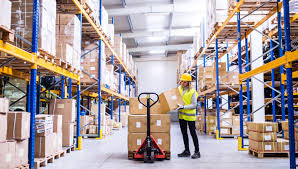
Any product on a store shelf or on your doorstep has already gone through a complicated path - a process that started at a production plant and has landed in your hands. Although transportation tends to dominate the limelight, it is warehousing and distribution that keep the supply chain rhythm going.
The modern world of high-paced customer-centred life is full of speed and precision, which are the attributes of success. However, even the most effective production or transportation systems may fail to work without efficient warehousing and distribution. They are not supporting functions, they are the very blood of world trade, to make things stored safely, managed smartly and delivered in time.
And why do the warehousing and distribution have such a significant influence in determining the efficiency in supply chain and business development?
The Foundation of Inventory Control
Essentially, warehousing and distribution ensures that goods are kept in key places, readily accessible as the need arises, and shipped out without any delays. A warehouse that is well managed assists in balancing between supply and demand by ensuring that there are appropriate inventories.
Contemporary warehouses are not only storage centres but also information operation centres with the help of Warehouse Management Systems (WMS) which monitor each and every item in real-time. This accuracy reduces stock-outs or stock-insufficiency and makes it easier to satisfy the needs of the customer.
Speed, Accuracy, and Customer Satisfaction
Speed is a given in a world where customers demand to get their products next-day. Effective warehousing and distribution systems reduce delivery times and this is achieved by storing as a strategic location to the significant markets.
As an example, regional warehouses in the UAE enable companies to optimise order delivery times, lower shipping expenses, as well as enhance the last-mile deliveries. The more adaptable the distribution channel, the greater the customer satisfaction, which is a measure that determines the success of a business in the competitive market over time.
The Connection Between Production and Consumption
Visions Think of warehousing and distribution as a connection between manufacturers and consumers. In their absence the production might either exceed demand or lag behind the rise of the market. Warehouses make the flow of goods more predictable since they serve as a buffer, which means that the production lines continue their work and the retailers are stocked.
Distribution centres go a step further and coordinate outbound logistics, i.e. selecting the most appropriate transportation pathways, packaging and timing of delivery. This coordination minimises delays and eliminates the expensive downtimes.
Operation and Cost Optimisation
Warehousing and distribution can be considered a cost centre but once handled effectively it is one of the main profit centres. Warehousing and distribution is centralised thus minimising the transportation expenses since bulk shipment is stored and dispatched centrally within the regions.
Efficiency is also boosted by automation. Picking robots, barcode readers, and AI-based route optimisation decrease the labour expenses and mistakes. Companies that have invested in modern warehousing technologies are able to move products at lower costs, with less time and with greater accuracy than their competitors, who have not.
Improving Visibility of the Supply Chain
Modern logistics is based on transparency. The current warehousing and Distribution systems are coupled with enterprise resource planning (ERP) and transportation management software (TMS), which provide real-time visibility of the whole supply chain.
This implies that businesses are able to follow the shipment, stock control and predict the changes in demand even before they influence the business. Exposure does not only make forecasting better, but also accountability which ensures that all processes are aligned to the business objectives.
Fitting the Market and Environmental Changes
The modern global supply chains are under a continuous challenge, whether it is the changing consumer patterns, or geopolitical conflict and environmental concerns. Agile warehousing and distribution systems allow companies to become adaptable fast.
In the event of disruptions, e.g., closing down a port, or a surge in demand, flexible warehousing networks can divert shipments and reorder inventory. Companies that are eco conscious are also introducing green warehousing programmes - e.g. solar energy, electric forklifts, and recyclable packaging to minimise its carbon footprint without compromising efficiency.
Partnering with the Right Logistics Experts
Outsourcing warehousing and distribution to logistics vendors with scale and expertise is scaled and specialised and is beneficial to many businesses. In the UAE, there are third-party logistics (3PL) and fourth-party logistics (4PL) providers, such as those offering modern infrastructure and technology-based solutions that maximise the efficiency of costs and improve reliability.
Coupled with collaborating with professionals familiar with local laws, transportation logistics, and expectations of the customers, the business will be able to pursue its core business competencies and at the same time maintain end to end product movement, without interruptions, in terms of time and place, to satisfy the customers.
Conclusion
The whole supply chain would be out of rhythm without Warehousing and distribution. They deliver stability, speed, and accuracy that brings manufacturers, retailers and consumers together, so that products are delivered safely and in time to the destination.
Within a competitive landscape where being an efficient company means being a competitive company, when companies invest in smarter warehousing and distribution solutions, it is not only an operational control that is achieved but also a customer trust and reputation of the company brand wise and ultimately profitability.
So, when logistics is the flesh of the global trade, warehousing and distribution are its cardiac muscles - that beats all the pulses making business go.