How Marine Fuel Supply Is Evolving Through Bunkering Services
Jun 17, 2026
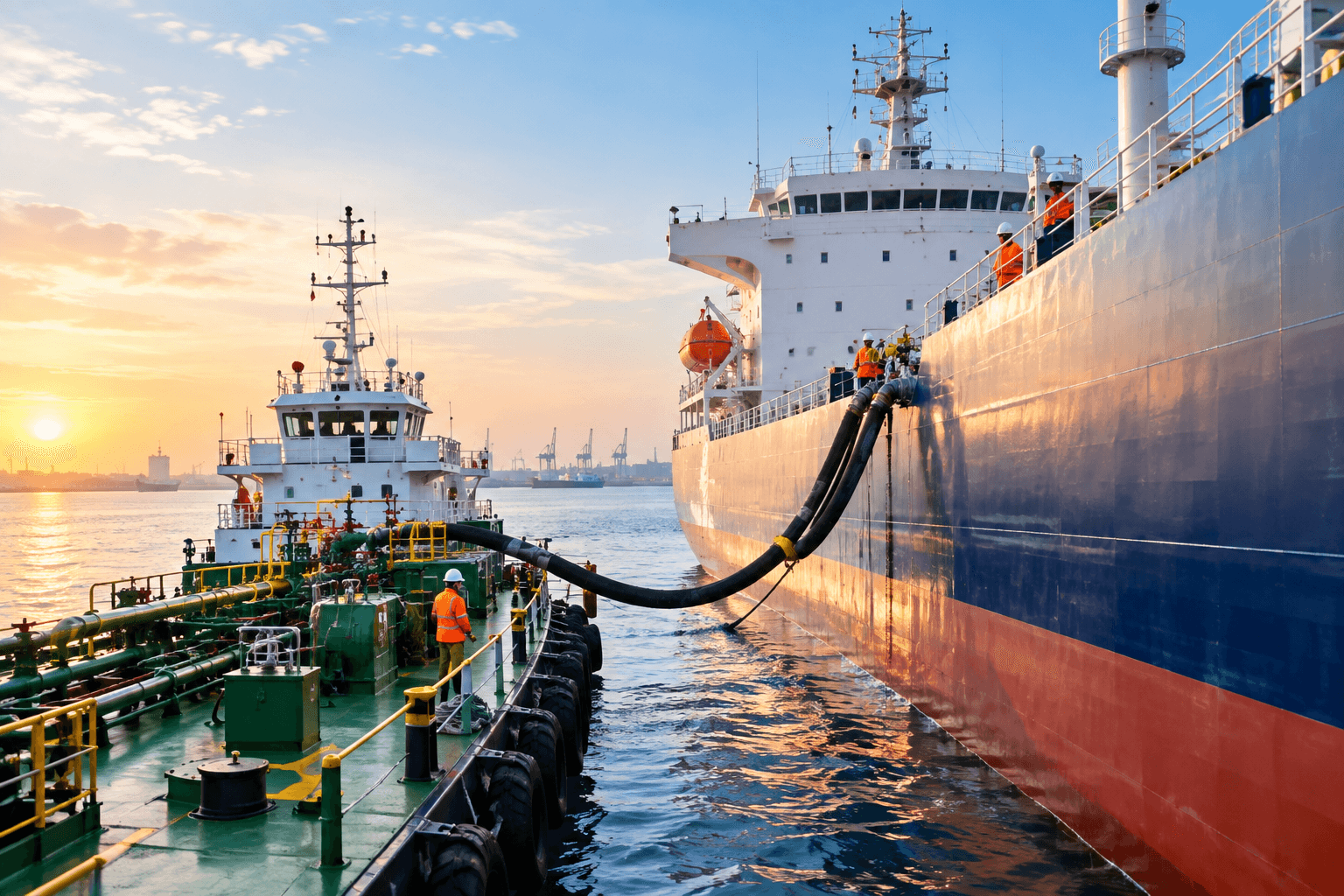
How Marine Fuel Supply Is Evolving Through Better Bunkering Services
The marine industry has seen marine fuel supply change in the past five years more than it did in the last two decades. The changes are drastic; be it tighter emission rules, new fuel grades, or stricter quantity checks, all have changed completely. But what actually had to keep up with the changes was bunkering services, the physical and administrative process of delivering fuel to ships. But this process has become more technical with the weight of regulatory authority that never existed before 2020.
Why the Old Model of Bunkering Is Being Replaced
For decades, bunkering services were a little more than a barge pulling alongside a vessel and pumping fuel oil into its tanks. As the measuring was not unit-based or accurate, it was often estimated through tank soundings. This practice was one of the main reasons for disputes over short deliveries, plus there were no rules on checking fuel quality. The quality of the fuel was only sometimes considered after fueling the tank and departing the ship from the port, leaving deliberate room for errors.
Due to its nature of errors and inaccuracy, this model could not survive the regulatory changes that followed the IMO’s 2020 sulphur cap. This regulation directly limited the sulphur content in fuel to 0.50 per cent globally, unless a vessel used exhaust gas scrubbers. Now, the shipowners had to meet compliance in order to get into the waters without any heavy penalties. To guarantee the right sulphur content in the fuel, bunkering services switched to more precise measurement methods, accurate documentation, and closer coordination with a ship’s technical team.
Fuel Grades Are Multiplying, and Bunkering Services Have to Keep Up
Very low sulphur fuel oil, or VLSFO, now holds the largest share of the global bunker fuel market, accounting for close to 55 per cent of fuel sold in 2025. However, it was not the only option available to suppliers and shipowners, as there were many choices with upgrades. LNG bunkering has grown steadily as dual-fuel vessels enter service, and methanol is following the same path. Since its inception, more shipping lines have ordered methanol-capable ships to meet the EU’s FuelEU Maritime targets and the EU Emission Trading System.
In 2026, another layer of complexity was added to biofuel blends. Blends of B24 and B30, created by mixing conventional fuel with fatty acid methyl esters, have seen a rapid popularity. In short, a supplier of bunkering services today has to manage a wider fuel matrix than it did five years ago. This process is not just a game of the right combination but the right ratio too.
Mass Flow Metres Have Changed What Accuracy Means
Out of all improvements in bunkering services, mass flow metre technology, commonly known as MFM, is one of the most practical ones. Unlike the traditional tank soundings, the latest MFM systems measure fuel by mass, which is measured while it flows through the delivery line. Suppliers and receiving vessel owners rely on this system for accurate measurement of the quantity of fuel transferred.
MFM was adopted by many countries, but in 2016 Singapore made it mandatory, and the practice has since spread to other major hubs. In the UAE, Fujairah is the world’s third-largest bunkering port by volume and is known for delivering high-quality services and transparency in Middle Eastern deliveries.
Documentation and Digital Tracking Are No Longer Optional
With stricter compliance, bunkering services require a lot more paperwork than a normal delivery receipt. Each transaction that takes place needs a bunker delivery note. This note confirms the grade, quantity, and sulphur content of the fuel supplies, and it includes a separate small quantity of the fuel for testing to help avoid disputes. With FuelEU Maritime and EU ETS compliance now tied to actual fuel consumption data, shipping companies across the globe need this documentation to be accurate and easy to retrieve.
There are independent testing bodies in the market that do fuel bunker analysis and provide advisory services. This has pushed suppliers of bunkering services to invest strategically in digital tracking systems to record delivery data automatically and help easily flag any inconsistencies before a vessel leaves port.
The Middle East’s Growing Role in Global Bunkering Services
Fujairah's position outside the Strait of Hormuz, on the Gulf of Oman, has made it the anchor point for bunkering services across the wider Arabian Peninsula and Indian Ocean trade routes. This is a refuelling point for vessels moving between East Africa, the Indian subcontinent, and the wider Gulf. Fujairah is a golden junction for vessels, as they can get the fuel without the insurance premium or pilotage complexity of entering the Strait itself. The port supplies millions of tonnes of marine fuel to vessels each year. Industry forecasts also point to the Middle East and Africa region posting the fastest growth rate in global bunker fuel demand between 2026 and 2033, ahead of more established hubs.
What This Means For Shipowners and Operators
For shipowners, the practical takeaway is simple: choose a bunkering services provider wisely, not just for the best fuel prices but for meeting compliance by offering mass flow metres, complete documentation and more. Supplying the fuel grade a vessel’s engines actually require is one of the most crucial things.
Marine fuel has upgraded far beyond a transactional activity to a compliance-driven one. The suppliers who are investing in accurate measurement, digital documentation, and a wider fuel portfolio are the ones setting the standard for what reliable bunkering services should look like going forward. Operators who have a partner with them who has already invested in such help reduce operational risks and the paperwork burden that comes with today’s tighter regulatory environment.